
Your Split AC in Irqah Stopped Cooling. Here’s the Real Reason Why.
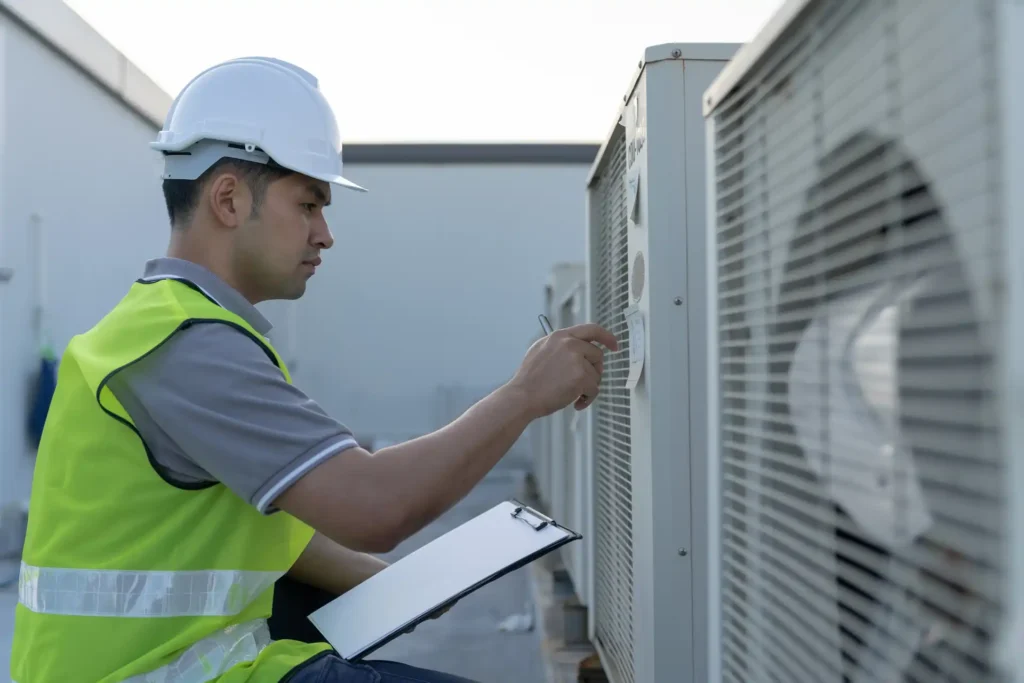
Irqah summers cook your outdoor unit from the moment May lands. Your split AC runs flat out all day, and one evening the air turns warm and the room won’t drop below 38. When that happens, you need split AC repair in Irqah that shows up the same day, finds the actual fault and fixes it properly — not a quick gas top-up that buys you 6 weeks before the same problem comes back. AC Doctor Riyadh by Muhammad Nabeel covers Irqah with technicians available 24/7. Same-day visits. Straight answers. Why split ACs in Irqah fail faster than they should Irqah is mostly villas and residential buildings on the western edge of Riyadh. Outdoor units sit on rooftops and side walls taking full sun from morning through afternoon. The split AC doesn’t get a break from May through September. A unit running 14 to 18 hours a day in 45°C heat starts failing in very predictable ways. Low refrigerant. Gas leaks slowly from a hairline crack in the copper line. The unit keeps running but the cooling drops week by week. Most people blame the heat right up until the compressor, starved of refrigerant for weeks, starts to overheat itself. Clogged filters and coils. Dust in Irqah is heavy. A blocked filter chokes airflow, the compressor overheats and a 5-minute cleaning you skipped in March becomes a real repair bill by July. The AC still turns on. It still pushes air. It just doesn’t cool the room, and most homeowners never trace that back to a dirty filter. Compressor failure. The compressor is the core of every split AC system. Once it goes, the unit hums and blows room-temperature air. Catch the early signs (short cycling, odd noise, warm air while running) at the capacitor stage and you’re looking at a small fix. Wait for the compressor to seize and the bill multiplies. Electrical faults. Capacitors fail, circuit boards burn, wiring corrodes. These show up constantly in units 4 to 5 years old with no service history. A weak capacitor usually means the outdoor unit struggles to start or the whole AC keeps tripping the breaker. One thing specific to Irqah villas: many homes run 2 or 3 split units off the same supply line. When the afternoon heat peaks and all of them fire up together, that load spike hammers the older capacitors and tired wiring. One unit failing in that situation is usually a warning the others aren’t far behind. When each fault type peaks through the year Irqah split AC — fault frequency by season Dirty filters Builds all year, worst by late spring before first service Low gas Slow leak shows up mid-summer when demand is highest Capacitor failure Peaks in June–July when outdoor temps hit max Compressor fault Late summer, after weeks of running on low gas or blocked airflow Drain blockage Monsoon humidity and heavy use spike drain clogs in summer Wiring faults Any season — mostly older units never inspected What happens when the technician arrives A good technician diagnoses before he picks up a screwdriver. At AC Doctor Riyadh the full check comes first: refrigerant pressure on a manifold gauge, compressor load test, capacitor reading, thermostat calibration and airflow measured at the indoor coil. You hear exactly what’s wrong. Then you decide. No work starts until you give the green light. The technician tells you what the fault is, what fixing it involves and what it costs. Then it’s your call. Split AC repair work covered across Irqah: Most jobs finish in a single visit. Standard parts travel with every technician. If yours needs something specialty, you’ll know the timeline before he leaves. Every diagnosis step — and what it checks 1 Refrigerant pressure reading Tells the technician exactly how much gas is left and confirms whether a leak is active. Manifold gauge 2 Compressor load test Checks if the compressor is drawing the right current. High draw means it’s straining. Clamp meter 3 Capacitor reading A weak capacitor is the most common cause of startup failure and short cycling. Capacitance meter 4 Thermostat calibration check Confirms the sensor is reading room temperature accurately and signaling the unit correctly. Digital thermometer 5 Airflow and coil inspection Dirty evaporator coils and blocked filters are measured here. Restriction shows immediately. Visual + anemometer The refrigerant type matters more than most people know Gas filling is the most common call from Irqah. Fan running, unit on, no error code — just warm air. That’s low refrigerant almost every time. People sit with it for weeks running the AC on max, watching the SEWA bill climb while the room stays warm. A slow leak from the last time someone opened the unit is almost always the cause. Refilling without sealing the leak first means you’ll be making the same call in 6 to 8 weeks. The team finds the leak point, seals it and recharges to manufacturer spec. One visit, done properly. Getting the refrigerant type right is not optional. An R22 unit topped up with R410A runs at the wrong pressure and damages the compressor seals over time. The technician checks the model plate before anything goes in. Catch it early or pay for it later Most people call only after the AC stops completely. Understandable — but expensive. The room takes longer to cool than it used to. The outdoor unit picks up a rattle it didn’t have before. The AC short cycles. Water drips from the indoor unit. A burning smell hits on startup. Any one of those is worth a call. A blocked drain line takes 10 minutes to flush. Leave it and the water backs up, soaks through the ceiling, stains the wall and shorts the indoor board. Now you’re paying for a board replacement, a drain clean and a paint job — all from something that cost almost nothing to fix 3 weeks ago. Small fault vs ignored fault — what it becomes CAUGHT EARLY Low gas (week 2)